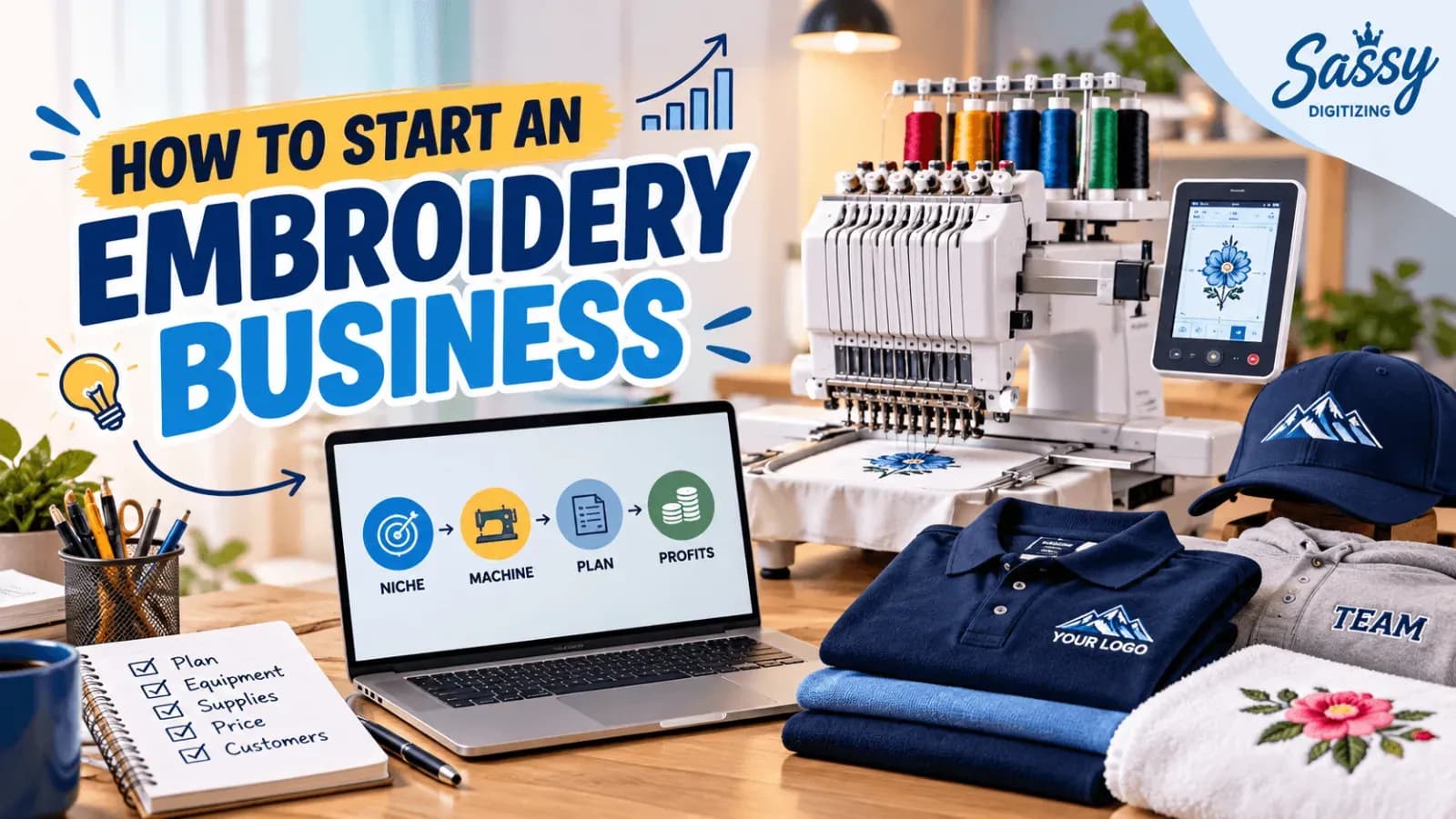
How to Start a Small Embroidery Business: 9 Steps
Quick answer
To start an embroidery business, pick one niche, buy a machine that fits your order volume, register the business, price every job from its stitch count and garment cost, and line up a reliable source of embroidery files. A home-based setup starts at roughly $1,000 to $3,500. A shop built around a commercial multi-needle machine usually needs $10,000 to $25,000.
New shop? You do not need digitizing software on day one. Outsource your customer logos from $15 each and spend your time selling.
Starting an embroidery business is one of the more practical small businesses you can run from home. Local companies, sports teams, schools and gift buyers all want custom logos and names on shirts, caps and bags, and they come back when they need more. This guide walks you through the whole process, from choosing a niche to landing your first paying customers.
Key takeaways
- Start with one niche, such as team wear, corporate uniforms or personalized gifts, and grow from there.
- Your machine choice depends on volume. A home machine suits gifts and small batches; a multi-needle machine suits uniforms and caps.
- Price by stitch count, garment cost and setup time, never by guesswork.
- Clean embroidery files matter as much as the machine. Learn digitizing or outsource it from day one.
In this guide
Is an Embroidery Business Worth Starting?
It can be. Embroidery has a few advantages over other print methods: the result looks premium, it lasts for years, and business customers reorder the same logo again and again. Once a logo is digitized, every reorder is mostly machine time and blanks, so repeat work is where most shops make their margin.
The honest downsides: there is a real learning curve, commercial machines are expensive, and production takes longer than heat transfers or DTF printing. Shops that do well usually pick a clear audience, price properly, and avoid wasting garments on poor files.
How to Start a Small Embroidery Business in 9 Steps
1. Choose your niche
Trying to sell everything to everyone makes marketing hard. Pick one group you can reach easily and build from there.
| Niche | Typical customers | Popular items |
|---|---|---|
| Corporate and uniform wear | Restaurants, contractors, offices, clinics | Polos, work shirts, jackets, caps |
| Teams and schools | Youth leagues, high schools, booster clubs | Hoodies, caps, bags, warm-up jackets |
| Personalized gifts | Weddings, baby showers, holidays | Towels, blankets, totes, baby items |
| Online store (Etsy, Shopify) | Gift buyers nationwide | Name sweatshirts, hats, pet items |
| First responders and clubs | Fire, EMS, motorcycle and car clubs | Patches, jacket backs, caps |
2. Write a simple embroidery business plan
You do not need a 40-page document. One page that answers these questions is enough to keep you on track:
- Who are your first 20 customers, and how will you reach them?
- What will you sell first, and at what price?
- How much do you need to spend before your first sale?
- How many pieces a week do you need to cover your costs?
3. Choose your embroidery machine
This is your biggest decision. A single-needle home machine is cheap to start with but needs a thread change for every color. A multi-needle machine holds many colors at once, stitches faster and handles caps on a cap frame, which is why most commercial shops use one.
| Single-needle home machine | Multi-needle commercial machine | |
|---|---|---|
| Typical price | About $400 to $1,500 | About $8,000 to $20,000+ |
| Colors per run | One (you rethread for each color) | Usually 6 to 15 |
| Max design size | Usually 4 x 4 to 8 x 12 inches | Often 12 x 14 inches or larger |
| Caps | Very limited | Yes, with a cap frame |
| Best for | Gifts, testing the market, small batches | Uniforms, caps, bulk orders |
Compare models in our guides to the best home embroidery machines and the best commercial embroidery machines. Prices change often, so check current dealer quotes before you buy.
4. Stock up on supplies
- Thread: a starter set of polyester embroidery thread in common logo colors (black, white, red, royal blue, navy, gold) plus bobbin thread.
- Stabilizer: cutaway for knits like t-shirts and polos, tearaway for stable fabrics and caps, and a water-soluble topper for towels and fleece.
- Needles: 75/11 sharps and ballpoints cover most jobs.
- Blanks: buy from wholesale apparel distributors. Most require a resale certificate, which brings us to the next step.
5. Register your business
Rules depend on your state and country, but most new US embroidery shops handle these basics:
- Choose a structure. Many owners form an LLC to keep business and personal finances separate.
- Get an EIN from the IRS (free) and open a business bank account.
- Register for a sales tax permit, which also lets you buy blanks tax-free for resale with a resale certificate.
- Check local business license and home-business zoning rules.
- Ask about general liability insurance, especially if you hold customer garments.
Note
This is general information, not legal or tax advice. Check your state's website or talk to an accountant before you register.
6. Decide how you will get embroidery files
A machine cannot read a JPG or PNG logo. Every design must first be digitized, which means rebuilt stitch by stitch into a machine file such as DST or PES. You have two options:
- Learn to digitize yourself. It takes good software and months of practice to produce clean, production-ready files.
- Outsource digitizing. Pay per design and get a ready-to-sew file back, so you can spend your time selling and producing. Many shops outsource everything at first, then bring simple jobs in-house later.
Most shops mix both. Our embroidery digitizing services handle logos for caps, left chest, jacket backs and 3D puff, so you can take on any job from day one.
7. Price your embroidery work
Underpricing is the most common reason new shops struggle. Build every quote from real costs, then add your margin:
| Cost | How to work it out |
|---|---|
| Garment | Your wholesale cost plus shipping |
| Machine time | Stitch count divided by your real stitches per minute, plus hooping and trimming time |
| Thread and backing | Small per piece, but it adds up on big orders |
| Digitizing | A one-time cost per new logo. Charge it as a setup fee or build it into the first order. |
| Margin | What is left must pay you and grow the business |
Many shops quote by stitch count with a minimum per piece and a minimum order size. Run a design through our free stitch calculator to estimate stitch counts before you quote.
8. Find your first customers
- Set up a free Google Business Profile so local buyers can find you.
- Visit local businesses, gyms, schools and youth leagues with a sample shirt or cap in hand.
- Show customers a preview before they order. Our free mockup generator puts their logo on a garment in seconds.
- Post finished work on Instagram and Facebook, and ask happy customers to tag you.
- Open an Etsy shop if you want personalized gifts and online orders.
9. Build a reliable production routine
Consistency keeps customers coming back. Stitch a test sample of every new design, keep each customer's files and thread colors in one folder, and check every piece for loose threads and puckering before it ships.
Starting out? Your first design is 50% off. Send us your first customer logo. A real digitizer builds it by hand and you get a PNG preview before the final file.
Get 50% off my first designSmall Embroidery Business Ideas That Sell
The easiest small embroidery businesses to start are the ones with repeat customers. A few that work well for one-machine shops:
- Local company uniforms: polos, caps and jackets for contractors, restaurants and clinics. Once the logo is digitized, reorders are quick.
- Team and school wear: youth leagues, school clubs and booster groups order every season.
- Personalized gifts: names and monograms on towels, baby blankets, sweatshirts and tote bags sell well online and at markets.
- Custom caps: hats are one of the most requested embroidered items, especially 3D puff logos on trucker caps. They need a multi-needle machine with a cap frame and a file made for cap digitizing.
- Patches: embroidered or appliqué patches for clubs, bikers and brands, which you can sell without stocking garments.
Pick one idea to start. You can add more once your production routine is steady.
Small Embroidery Business Startup Costs
These are typical ranges for a small US shop in 2026. Your numbers will depend on the machine you choose and how much stock you carry.
| Item | Home-based start | Commercial start |
|---|---|---|
| Embroidery machine | $400 to $1,500 | $8,000 to $20,000+ |
| Thread, bobbins, needles | $100 to $300 | $300 to $700 |
| Stabilizer and toppers | $50 to $150 | $150 to $400 |
| Starter stock of blanks | $200 to $800 | $500 to $2,000 |
| Business registration and licenses | $50 to $500 | $50 to $500 |
| Digitizing (first designs) | Pay as you go | Pay as you go |
| Typical total | About $1,000 to $3,500 | About $10,000 to $25,000 |
Outsourced digitizing keeps upfront costs low because you pay per design instead of buying expensive software. See our digitizing pricing or get an instant estimate with the embroidery price calculator.
Common Mistakes New Embroidery Businesses Make
- Stitching logos you do not have rights to. Sports teams, universities and big brands are trademarked. Only embroider logos the customer owns or has permission to use.
- Using auto-digitized files. Cheap auto-converted files often break thread and pucker fabric. Read why in our guide to AI vs manual embroidery digitizing.
- Skipping the test sew-out. One sample on scrap fabric costs far less than a ruined order of 50 polos.
- Ignoring the fabric. A design built for a twill cap will not sew the same on a stretchy polo. Our guide to stopping embroidery puckering on polos explains why.
- Pricing too low to win the first jobs. It is much harder to raise prices later than to start at a fair rate.
You may also find these useful: how much embroidery digitizing costs.
Make every order stitch out right.
Your machine is only as good as the file you give it. We digitize customer logos by hand for caps, polos and jackets, in every format.
Free PNG preview before delivery · Free small revisions until you're satisfied · 50% off your first order
See digitizing servicesFrequently Asked Questions
Is an embroidery business profitable?
It can be, especially with repeat business customers such as companies, schools and teams. Once a logo is digitized, reorders cost you mainly blanks and machine time, so steady repeat work is where the profit is. Shops that underprice or waste garments on bad files struggle.
How much does it cost to start an embroidery business?
A home-based embroidery business can start for roughly $1,000 to $3,500 with a single-needle machine and basic supplies. A commercial setup with a multi-needle machine usually costs $10,000 to $25,000 once you add supplies and stock.
Can I start an embroidery business from home?
Yes. Many successful shops start in a spare room or garage with one machine. Check your local zoning and home-business rules, and make sure your electrical setup can handle the machine.
Do I need to learn digitizing to run an embroidery business?
No. Many shops outsource all of their digitizing and focus on sales and production. Learning it later can save money on simple designs, but outsourcing gets you started faster with professional results.
What embroidery items sell best?
Polos, caps and hoodies with company or team logos sell steadily to businesses. For online and gift sales, personalized sweatshirts, towels, blankets and baby items are popular.
You may also find these useful: Best commercial embroidery machines, Embroidery file formats guide, Top embroidery digitizing companies in the USA.
How do I start a small embroidery business with no experience?
Start with one machine and one niche, practice on your own items first, and outsource digitizing so every order uses a clean file. Learn pricing before you take paid orders.
What machine should I buy to start an embroidery business?
A single-needle home machine is fine for testing the idea with names and small orders. If you plan to sell caps or run orders of 20 pieces or more, a multi-needle machine pays for itself in saved time.
Keith Blair

Senior Quality Control (HOD)
As the Head of Quality Control at Sassy Digitizing, Keith brings over 12 years of hands-on commercial embroidery experience to the table. He is our resident problem-solver, specializing in the technical nuances of stitch density, pull compensation, and complex digitizing. When he's not establishing quality standards for 3D puff and appliqué, you'll find him perfecting the art of small lettering to ensure every stitch counts.
Expertise:
Related Articles
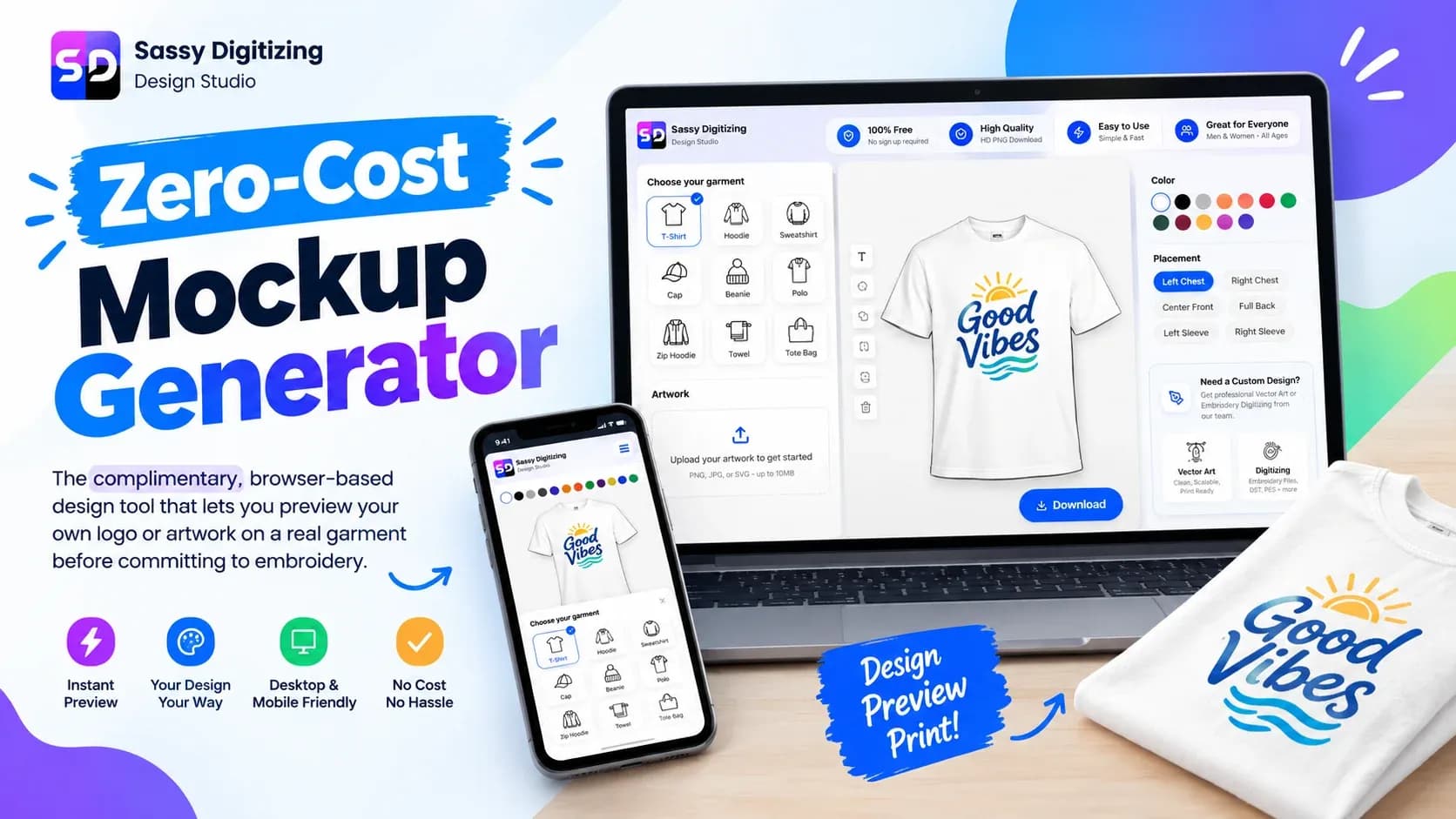
How to Use the Free Embroidery and Print Mockup Generator: Use Cases and Features
The free Sassy Digitizing Mockup Generator lets you upload your artwork and place it on a real garment, cap, beanie, tow…
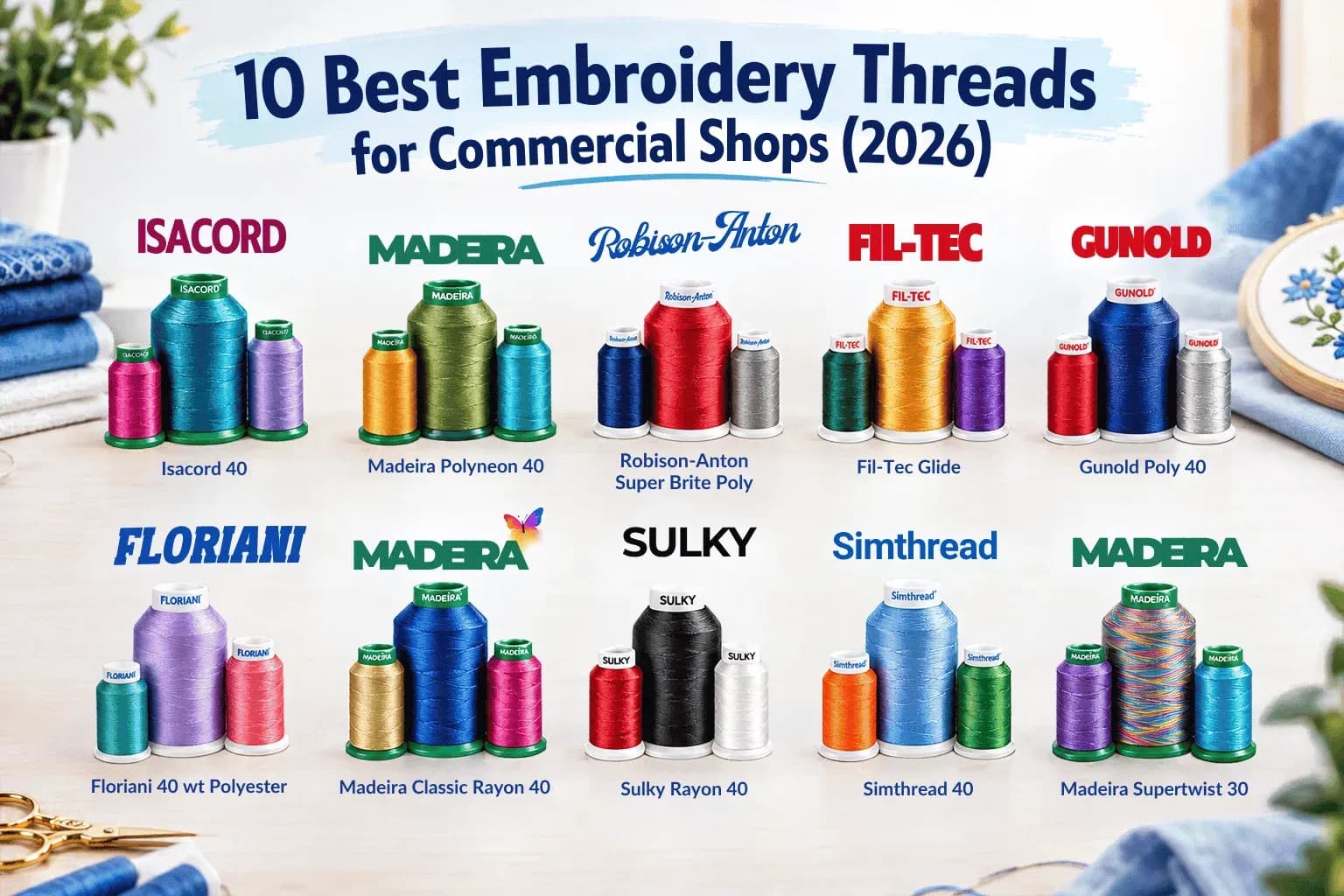
Best Machine Embroidery Thread: 10 Top Brands
The 10 best embroidery threads for commercial shops, ranked on run reliability, durability and color range, with weights…
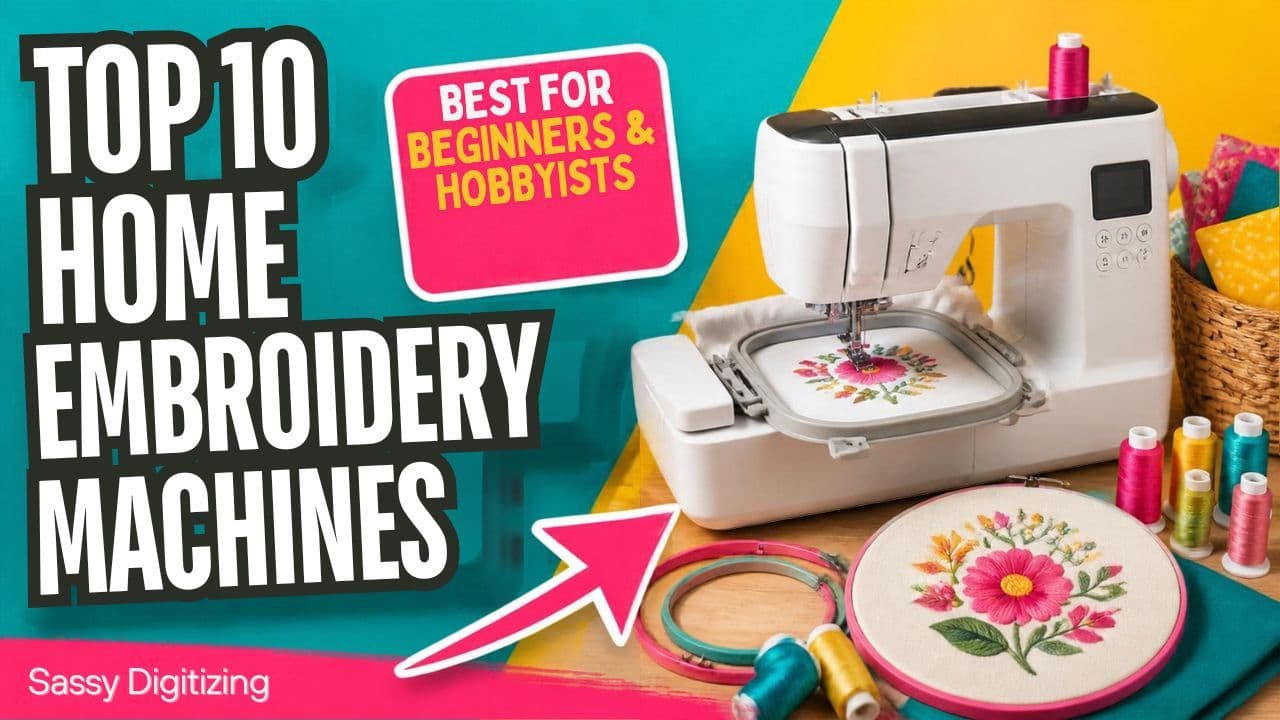
Embroidery Machine for Beginners: The 10 Best Picks
The best embroidery machine for beginners: 10 home machines compared by hoop size, built-in designs, file format and wha…